
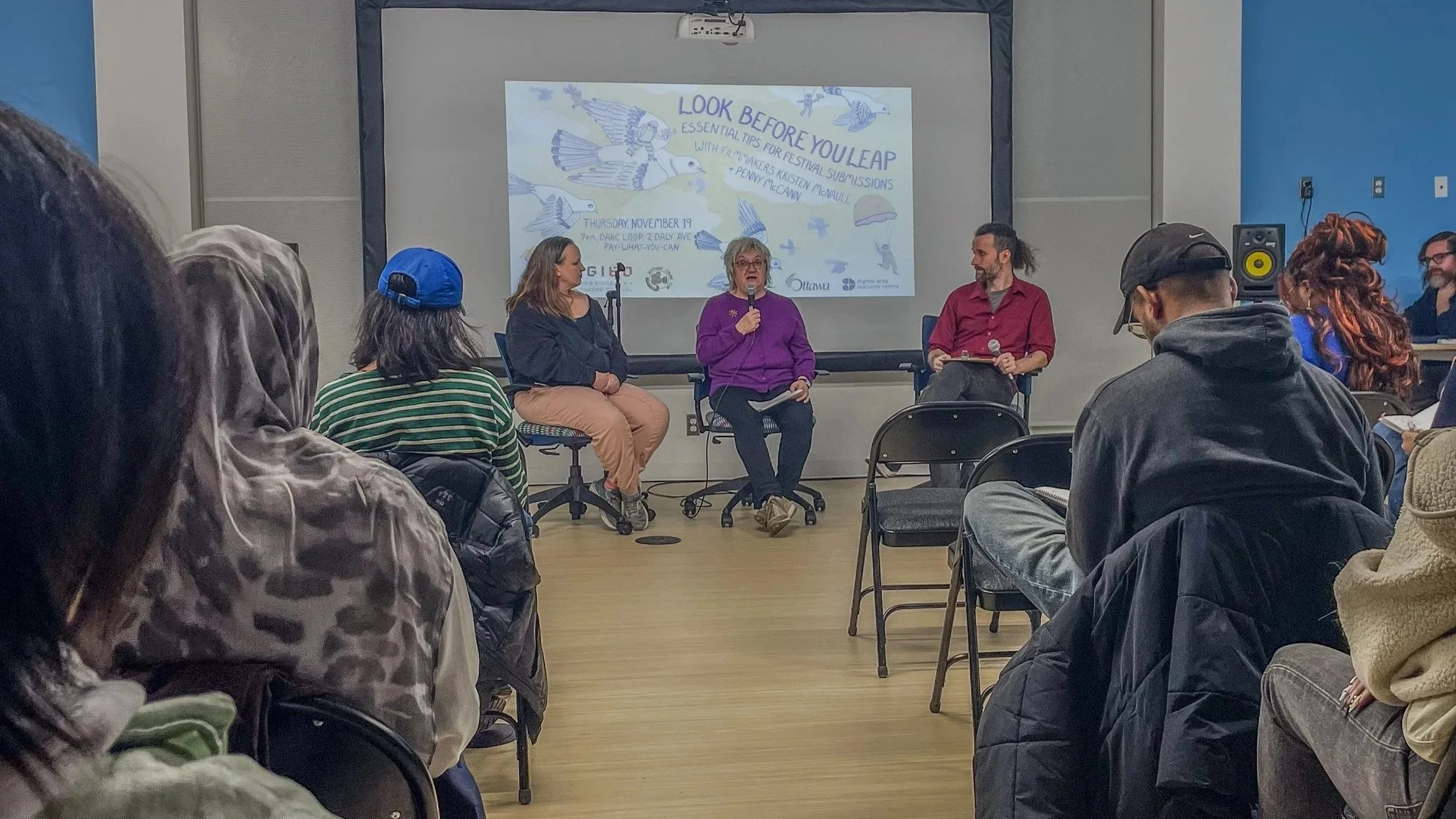
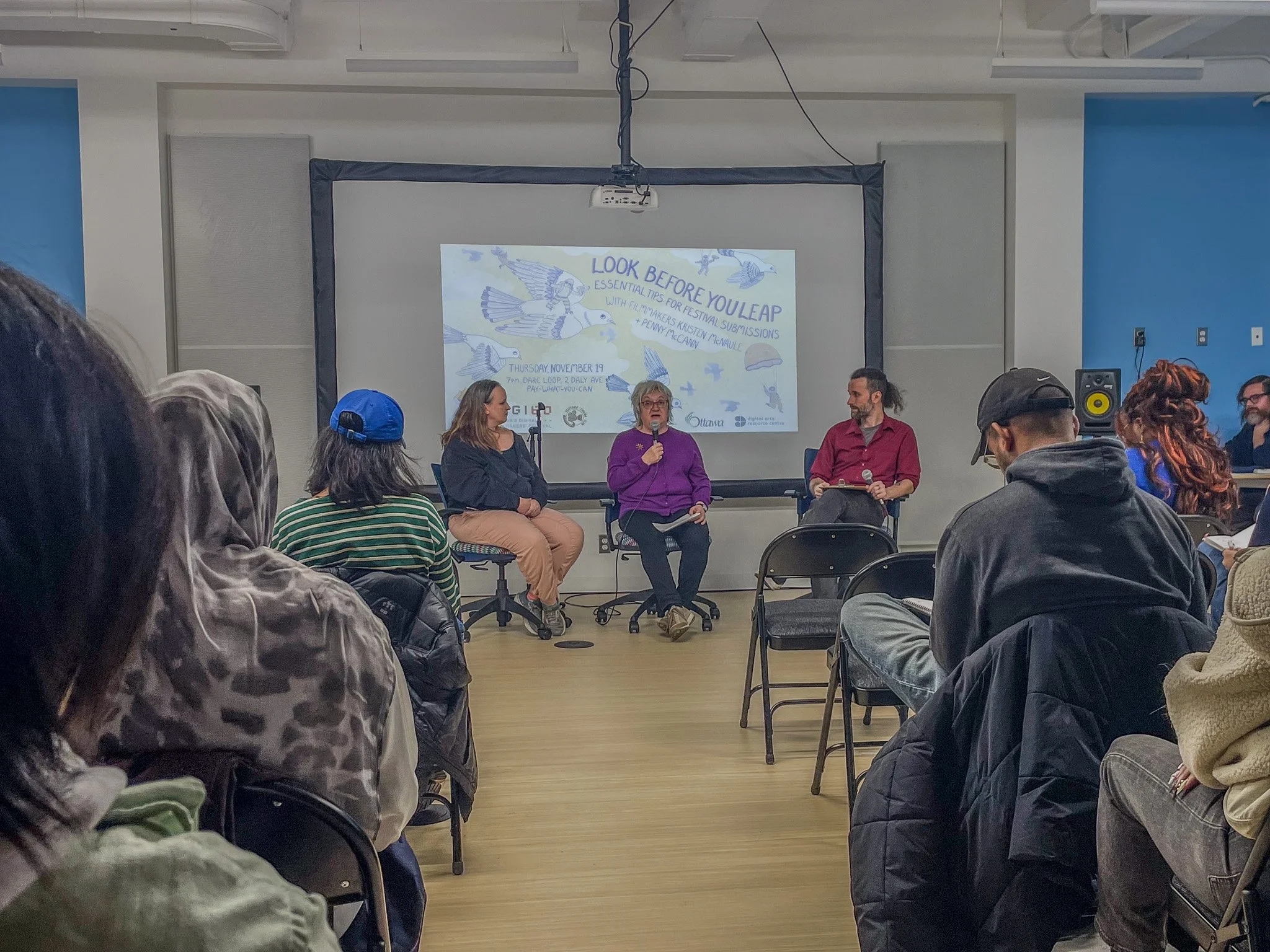
L-R: Kristen McNaule, Penny McCann, Christopher Rohde
5 Tips for Getting Your Short Film Into Festivals
Getting your short film into festivals takes more than clicking submit. It takes research, preparation and a little resilience.
On November 19, Digi60 joined Mirror Mountain Film Festival and the uOttawa Cinema Club to co-present Look Before You Leap: Essential Tips for Festival Submissions at the Digital Arts Resource Centre in Ottawa.
Filmmakers Penny McCann and Kristen McNaule shared their experiences navigating the festival circuit, with Christopher Rohde of Mirror Mountain Film Festival guiding the conversation. The discussion offered practical advice for filmmakers looking to give their work the best chance of reaching festival audiences.
Here are five takeaways from the evening.
1. Do Your Research Before Submitting
Not every festival is the right fit for every film.
Platforms like FilmFreeway are a great starting point for discovering festivals, but your research shouldn't stop there. Visit festival websites, check their social media activity and look at what they've programmed in previous years.
Are they actively running events? What kinds of films do they screen? Does your project fit their programming?
Taking the time to understand a festival before submitting can help you make more informed decisions about where to invest your time and submission fees.
2. Make Every Minute Count
When it comes to short films, runtime matters.
Festivals have limited programming time, and shorter films can sometimes offer more flexibility when putting together a screening. A 60-minute program could feature ten six-minute films or just three 20-minute films.
That doesn't mean every film needs to be as short as possible. It means being intentional about what makes it into your final cut.
Consider how quickly you get into your story. Are there scenes that aren't moving things forward? Can you communicate the same idea more efficiently?
Tell the story you want to tell, but make sure every minute earns its place.
3. Find the Right Audience for Your Film
Rather than submitting to every festival you can find, look for festivals that align with your project.
If your film explores a particular theme, genre or subject, there may be festivals specifically interested in that kind of storytelling.
Looking at past programming can help you identify where your film might connect with audiences and programmers.
The goal isn't simply to get selected. It's to find the right home for your film.
4. Give Your Submission Package Some Attention
Your film is the most important part of your submission, but the materials surrounding it can help festival programmers better understand your work.
Prepare strong stills, behind-the-scenes photographs, trailers, teasers and a clear synopsis.
Kristen McNaule also recommended including a cover letter when possible. Christopher Rohde agreed, noting that it can provide context that might not come through in a filmmaker biography or synopsis.
Rather than repeating information already included in your submission, use the opportunity to explain what makes your project personal. What inspired the story? Why did you want to tell it?
As Kristen emphasized, the cover letter should get to the heart of the project.
5. Expect Rejection, Celebrate Acceptance and Keep Creating
Rejection is part of the festival experience, and even great films won't be selected everywhere.
Penny McCann encouraged filmmakers to expect rejection rather than be discouraged by it. Festival programming involves difficult decisions, and a rejection doesn't necessarily reflect the quality of your work.
When your film does get accepted, make the most of it! If you can, attend the festival. Meet other filmmakers, build relationships and experience your work with an audience, ideally on a big screen.
And when your film isn't selected? Keep going.
Take what you've learned, continue developing your craft and start making the next project.
Keep Making Films
One of the biggest takeaways from Look Before You Leap was that a successful festival journey isn't just about acceptances. It's about finding audiences, building connections and continuing to grow as a filmmaker.
A big thank-you to Mirror Mountain Film Festival, Penny McCann, Kristen McNaule, Christopher Rohde, the uOttawa Cinema Club and DARC for bringing this conversation to Ottawa's filmmaking community.
Whether you're preparing your first festival submission or planning your next short film, there's always something new to learn.