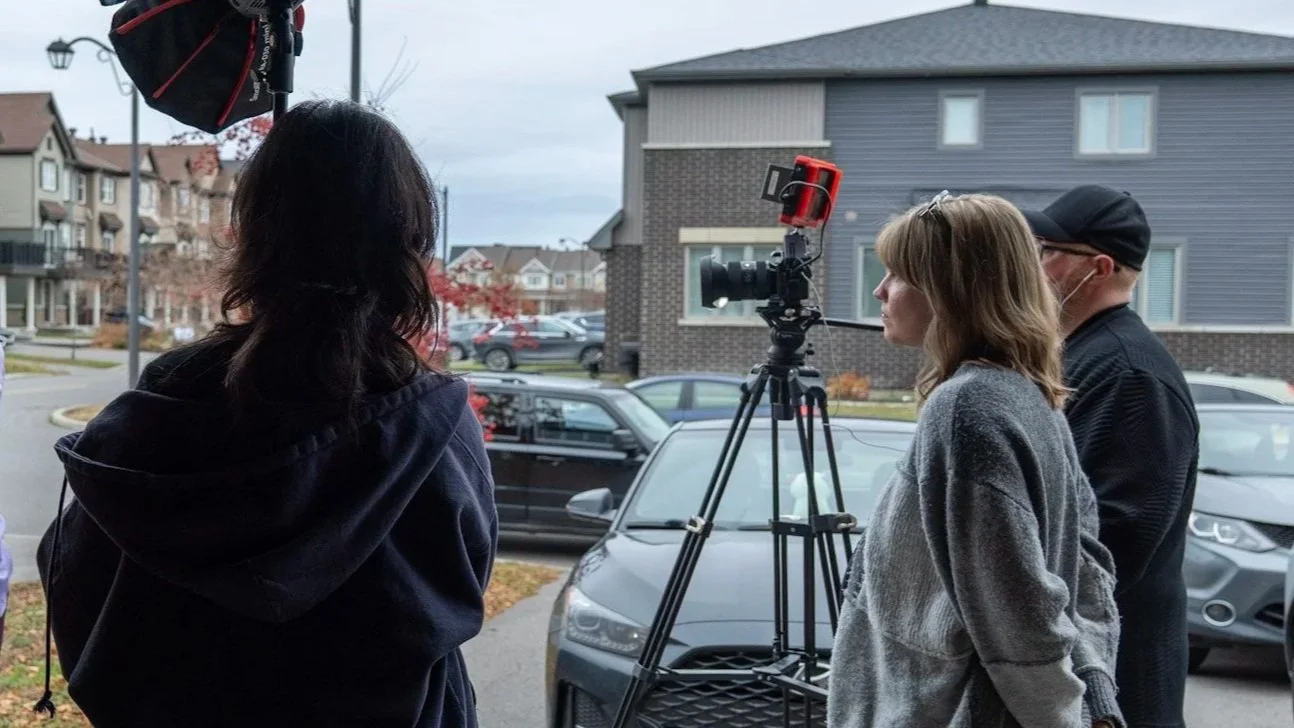
What does it actually look like to make a film in 60 days?
We spent a weekend visiting four filmmakers to find out, and the short answer is: it depends who you ask.
We ended up in a classroom, a living room, a café and a creative home workspace. No two sets worked the same way.
Stop 1: Behind the Scenes with Kameron Solomon & Elle Attson
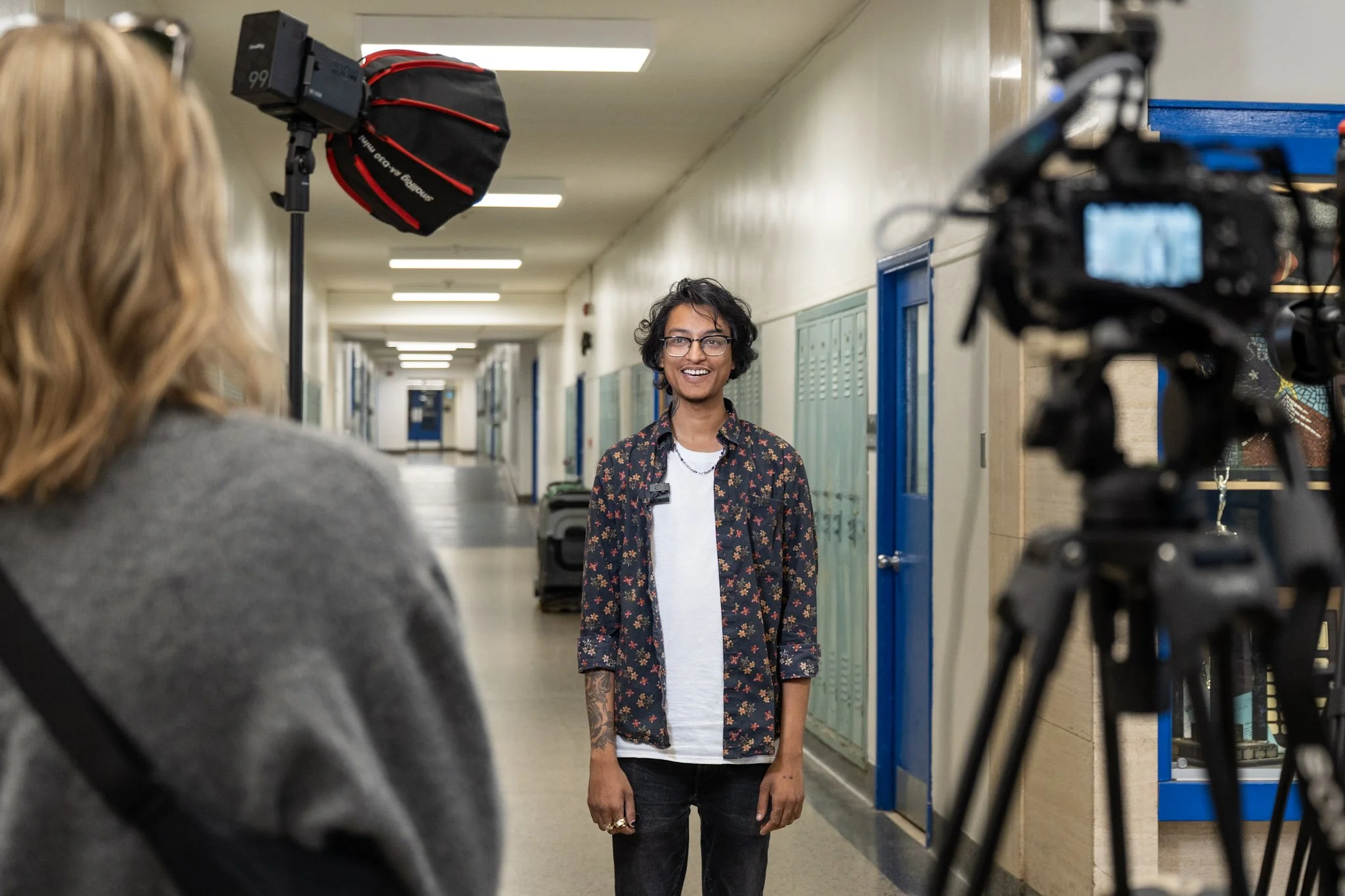
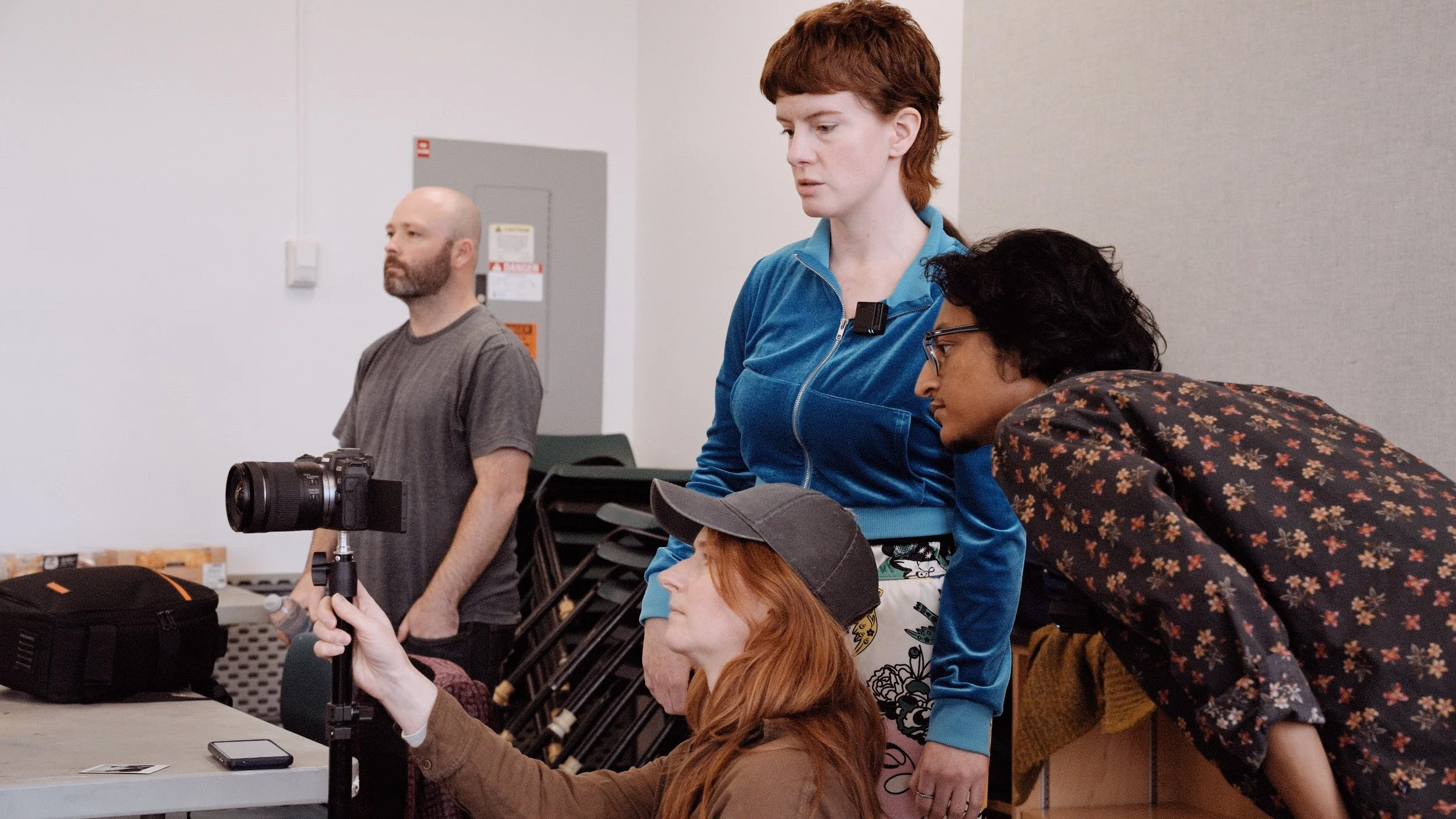
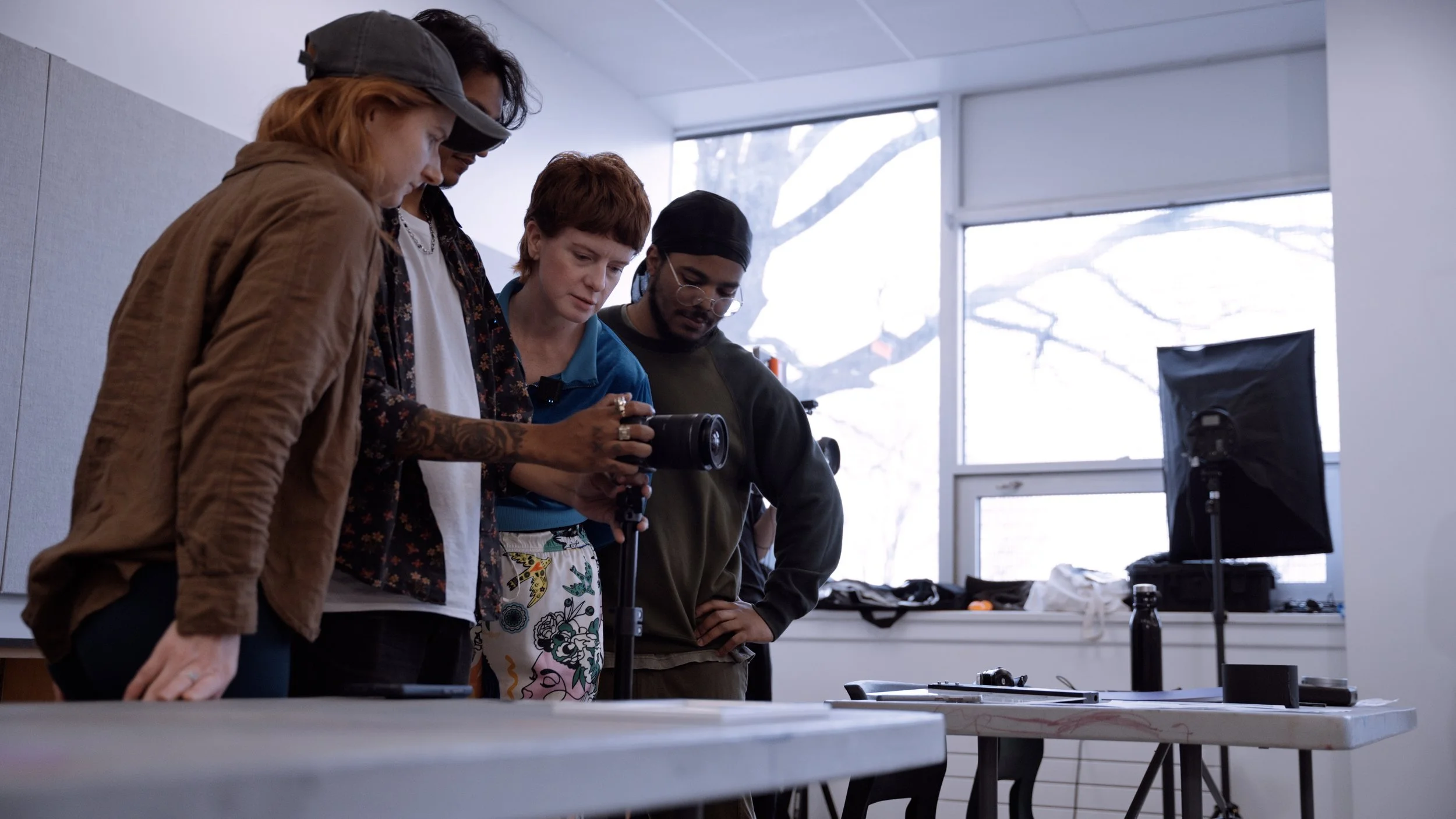
Our first stop was a classroom set with registered filmmaker Kameron (Kam) Solomon (Director of Photography), Elle Attson (Director, Producer, set designer) and their crew, which included several young actors. There was lots of conversation and laughter between takes, but as soon as the director called “Action,” the room went quiet, everyone snapping into place. We watched them work through a scene, shuffling props, repositioning actors, trying out angles. Then there was Kam’s idea for the camera setup: a skateboard, rolled along as a camera dolly. It seemed to work!
If you’re new to running a set, two things are worth noticing here. A relaxed crew and a focused crew aren’t opposites: the laughter between takes didn’t get in the way of everyone knowing exactly what to do once the camera was rolling. And you don’t always need specialized equipment to get a smooth, moving shot. Sometimes you just need to get creative with what’s already around.
Stop 2: Behind the Scenes with Jean-Sébastien Boyer & Katie Weber
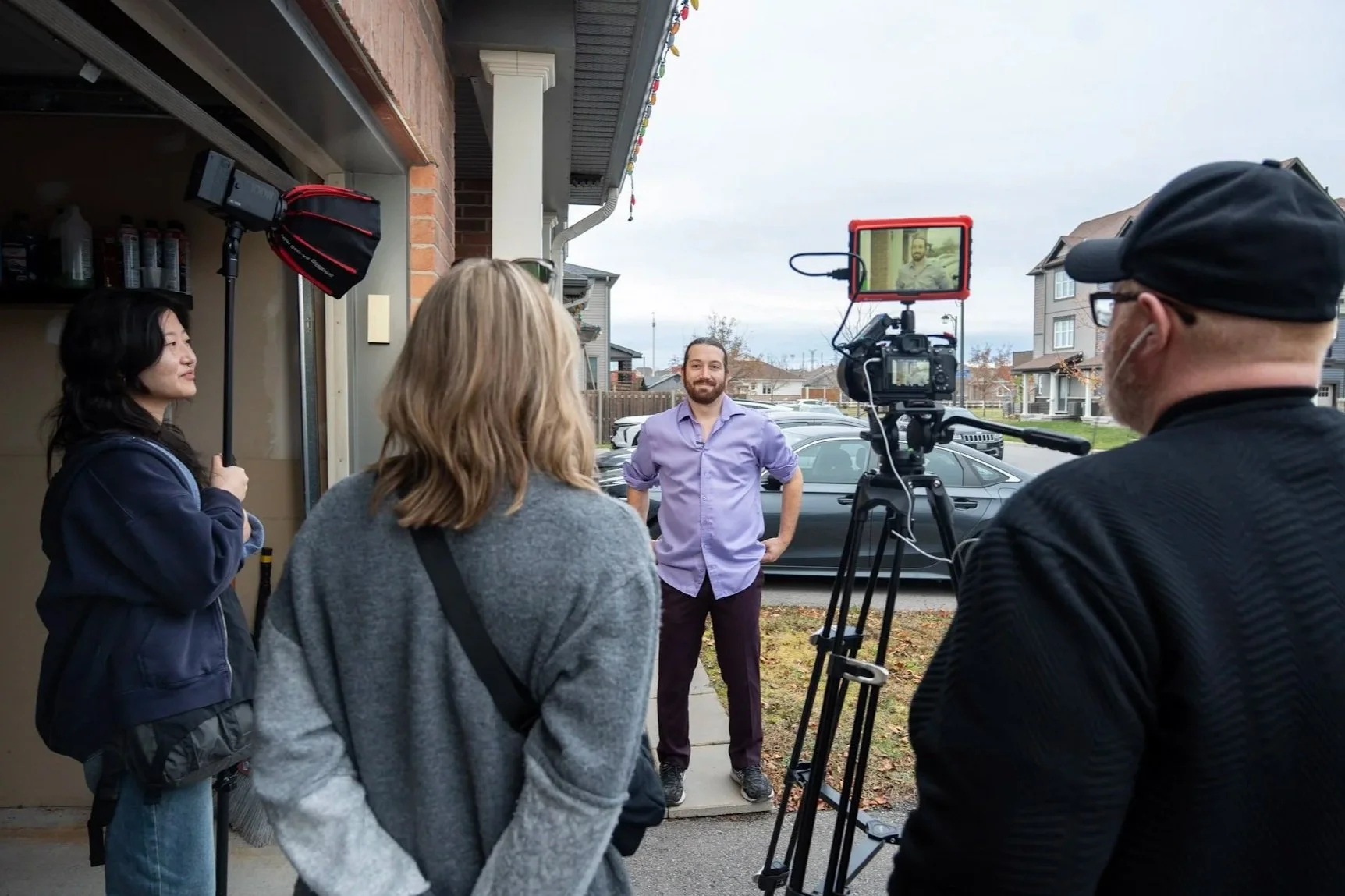
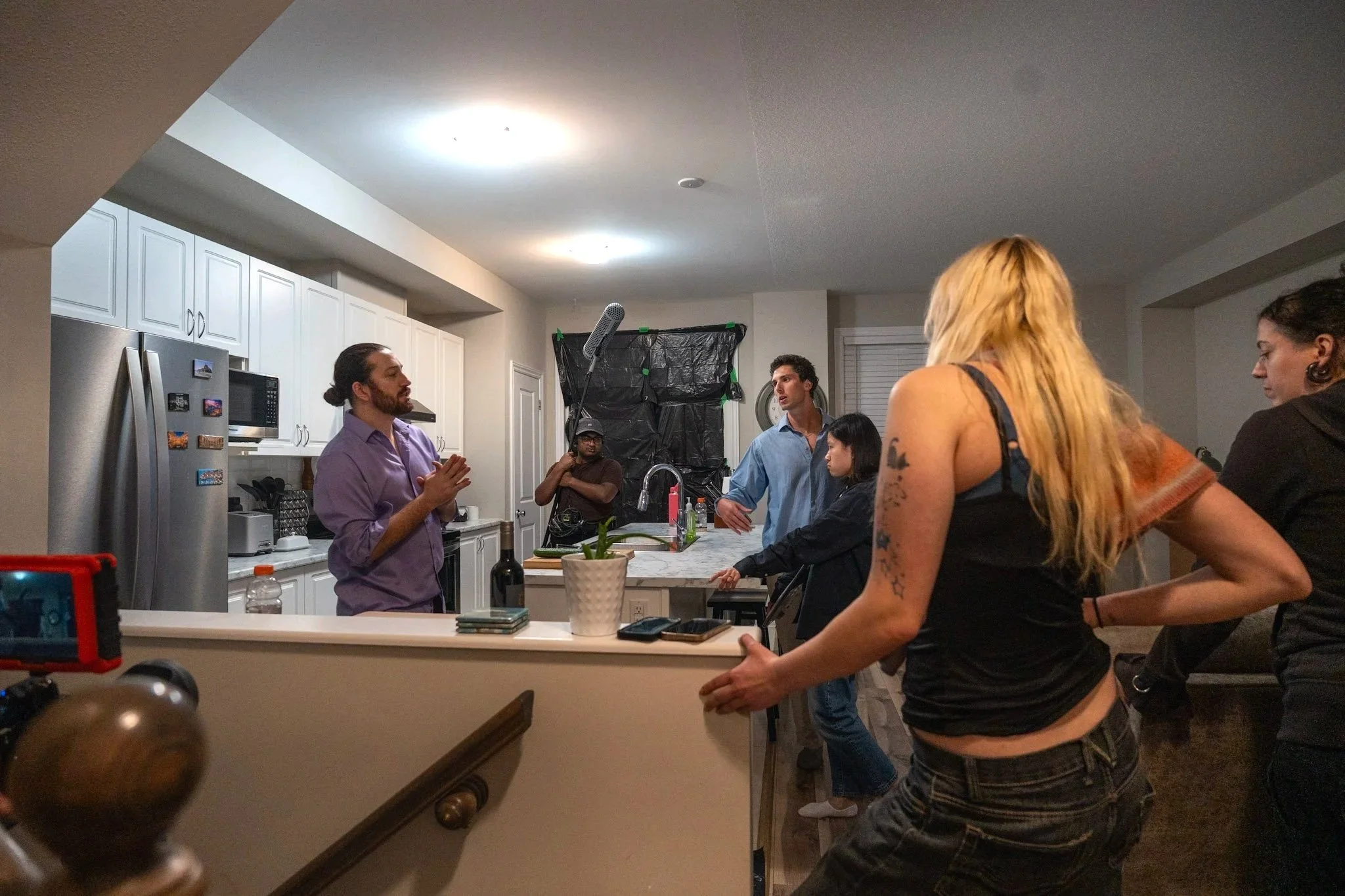
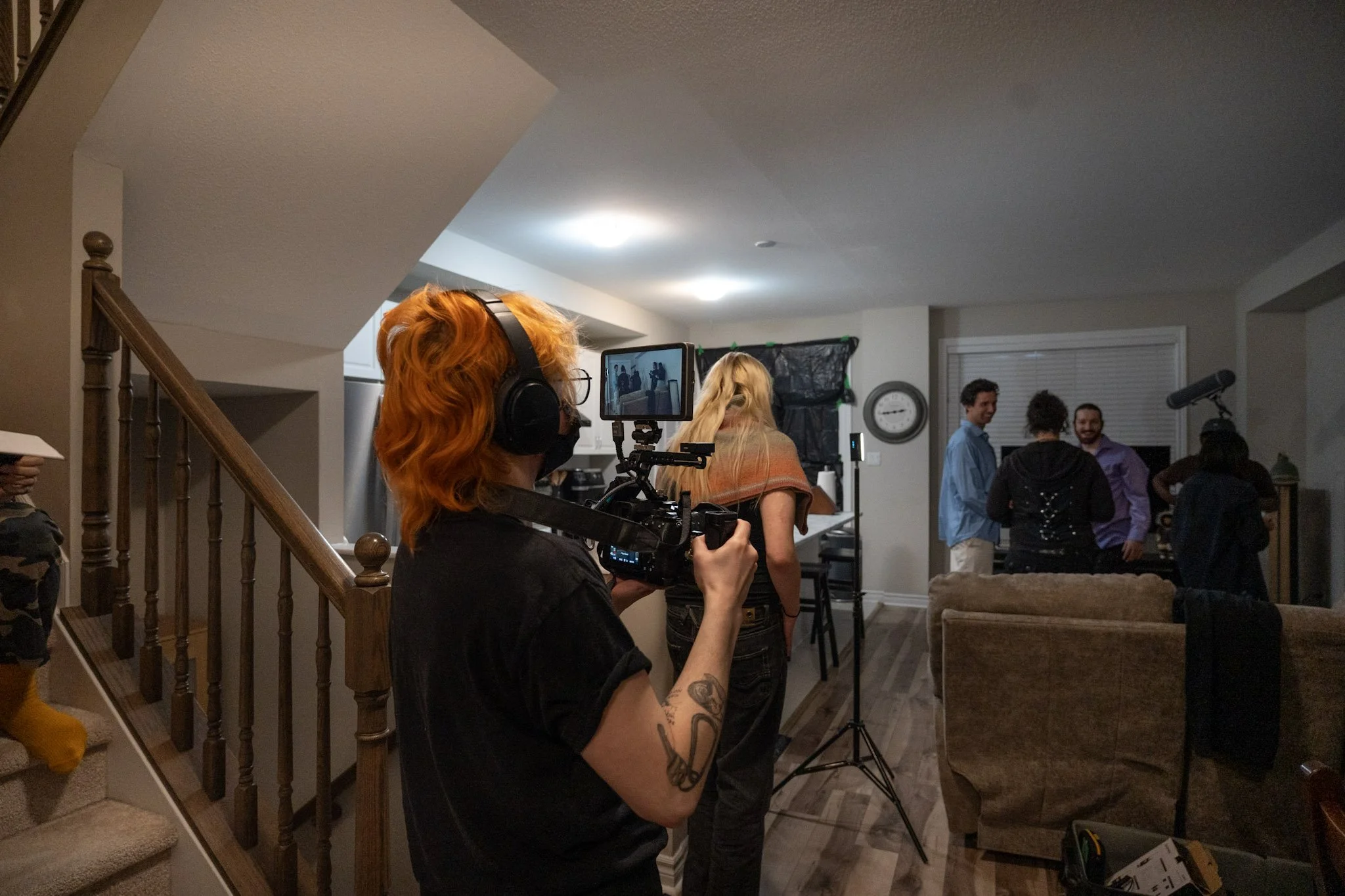
Our second visit took us to a house, where registered filmmaker Jean-Sébastien Boyer (Writer, Director, Producer, Actor), Katie Weber (Director of Photography, Producer) and their crew had taken over the living room and kitchen. With a full crew sharing the space, there was always something happening. Ideas and suggestions were traded across the room, and everyone worked together. But people were also comfortable running with their own tasks. When we pulled Jean-Sébastien aside for an interview, the crew kept going and continued filming. One person stepping away didn’t mean everything stopped for everyone else.
If you’re building a crew, that’s worth noticing. Sharing ideas freely and trusting each person to own their part can go hand in hand, and it means your shoot doesn’t depend on one person being in the room every minute.
Stop 3: Behind the Scenes with Sophie Twardus
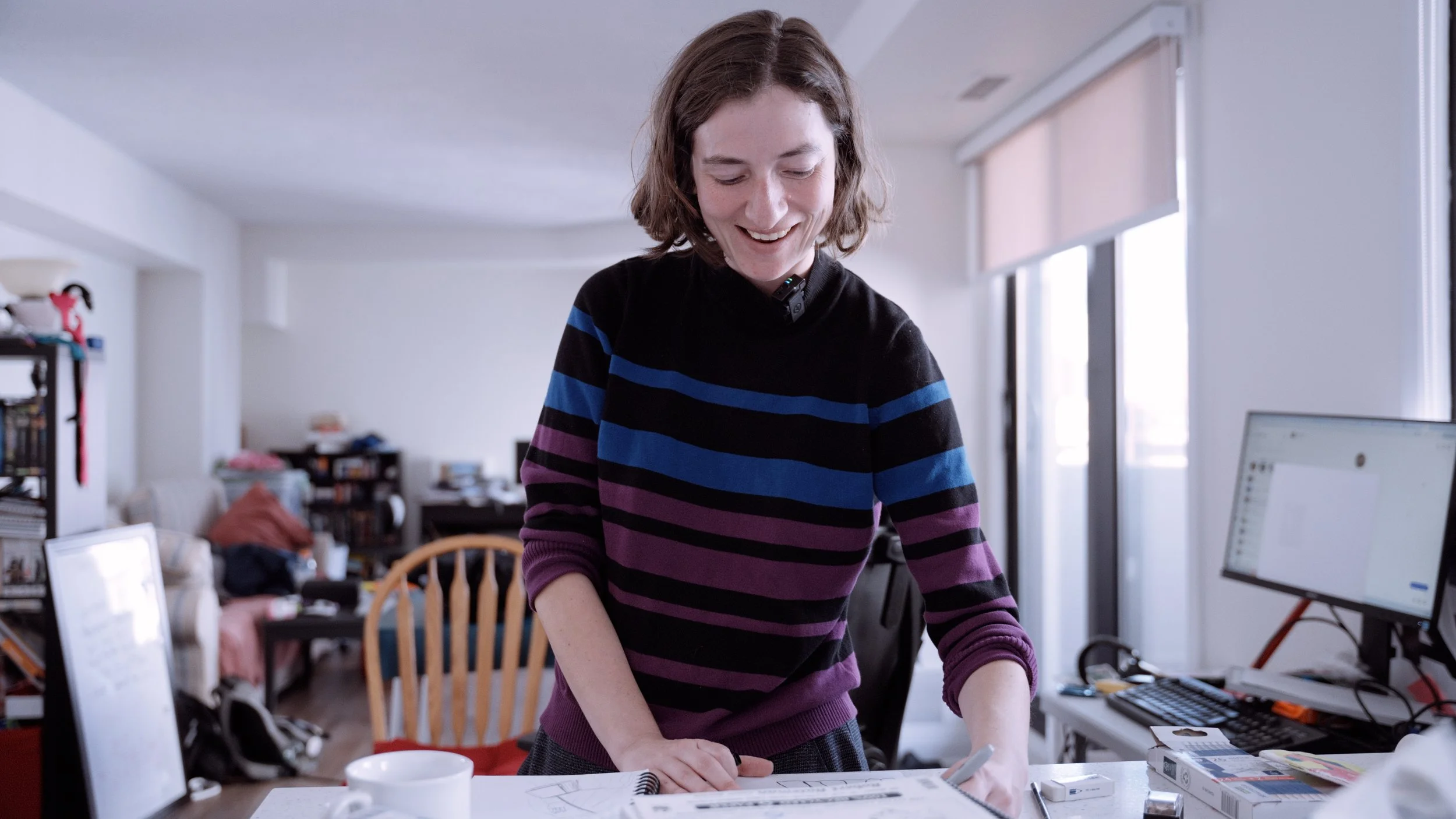
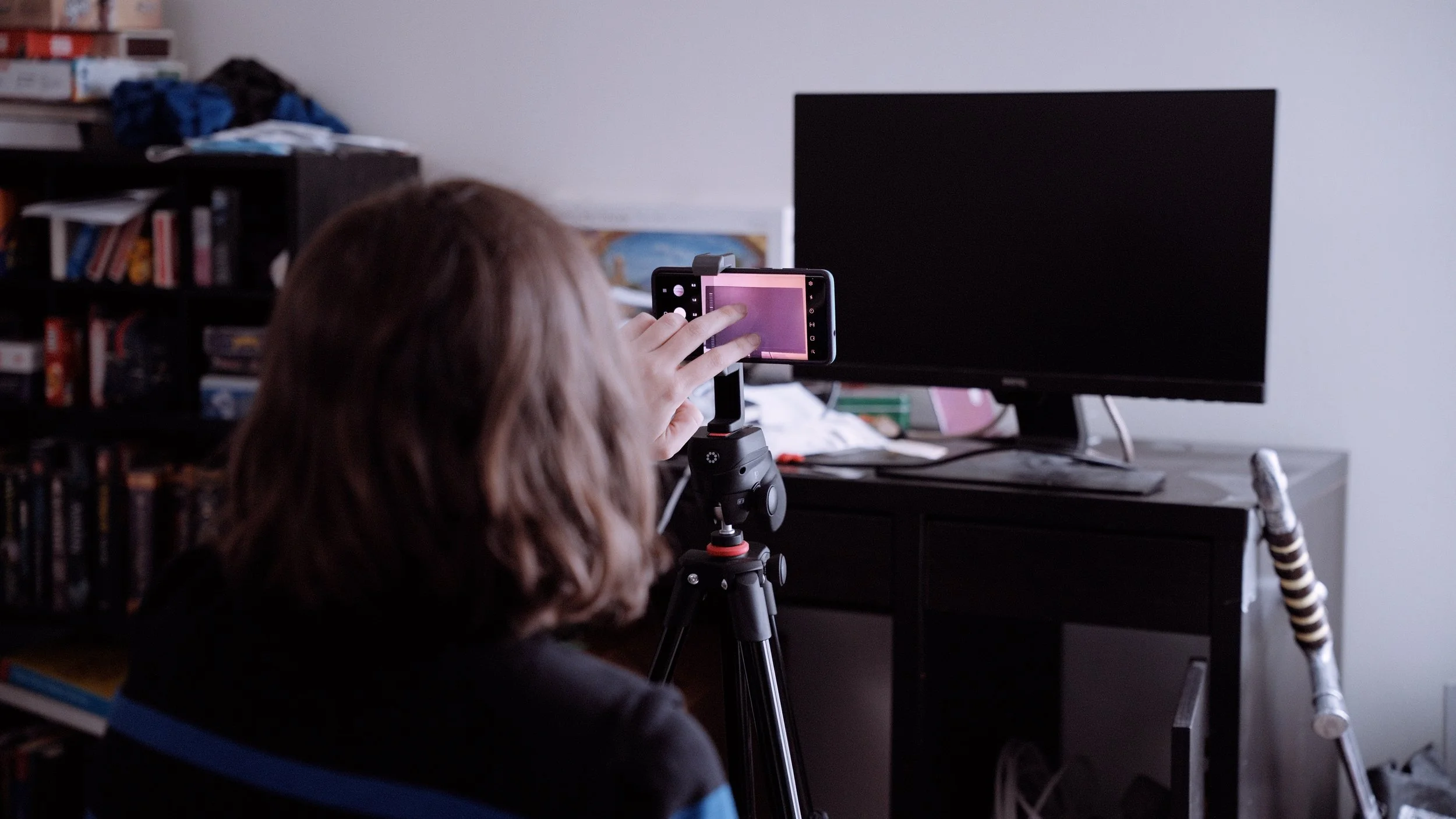
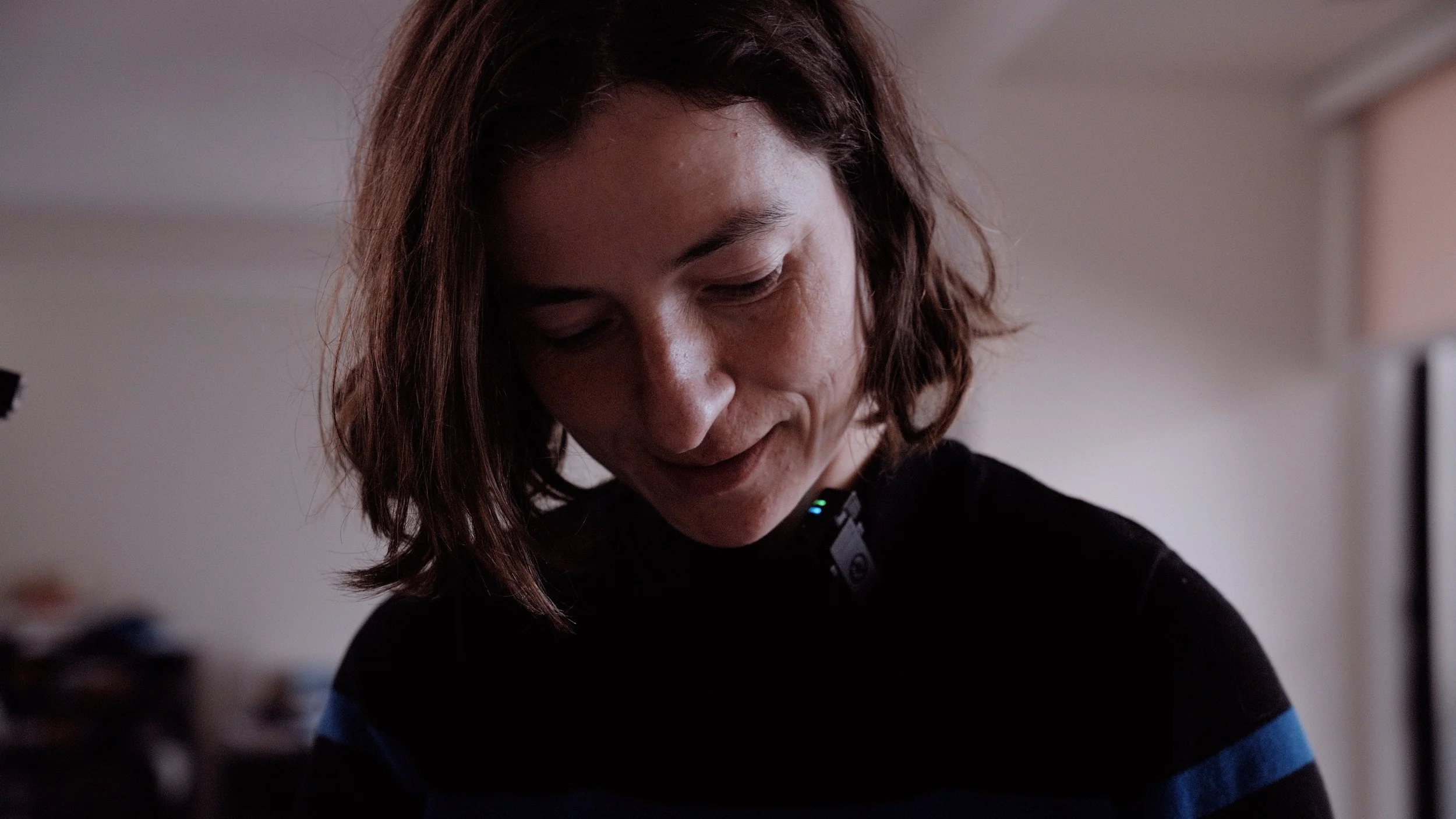
Our next visit was with Sophie, whose film is built around handmade drawings of her fictional characters. She’d just started drawing when we arrived, so she talked us through her ideas and how the characters would fit into the film. Her setup was simple: her phone filming the artwork, with a TV screen behind it as a black background.
Sophie chose this approach because it gave her the freedom to work independently and plan at a pace that suited her. She also shared that having a 60-day deadline is a big source of motivation—and maybe that's something we can all relate to. Sometimes, having a clear timeframe is what turns “someday” into “this week.” That's part of what makes the 60-Day Challenge so exciting: it gives emerging filmmakers 60 days to take an idea they've been sitting on and finally bring it to life.
Stop 4: Behind the Scenes with Ruth Kabengele & Kenneth Joe-Ezigbo
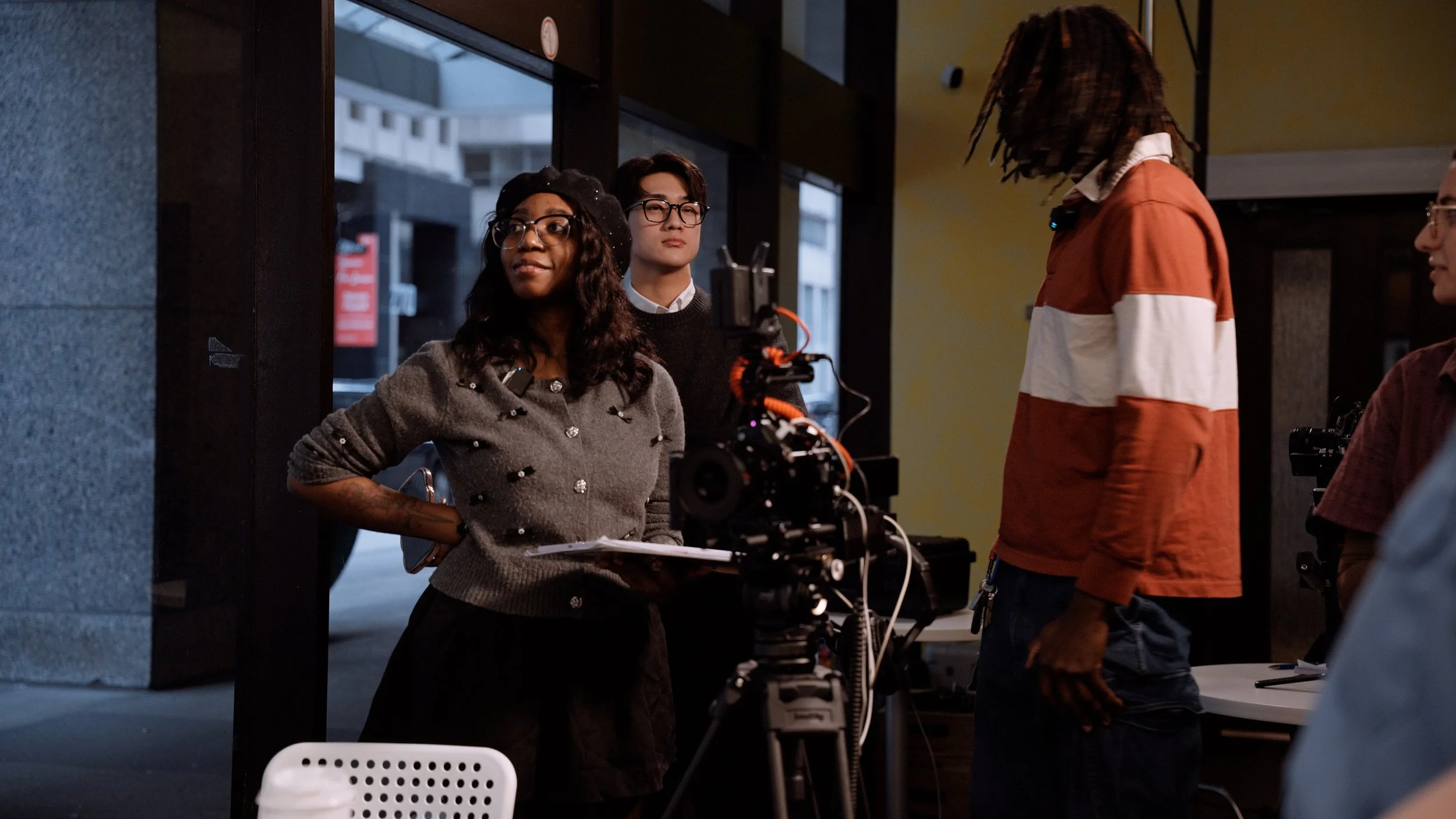
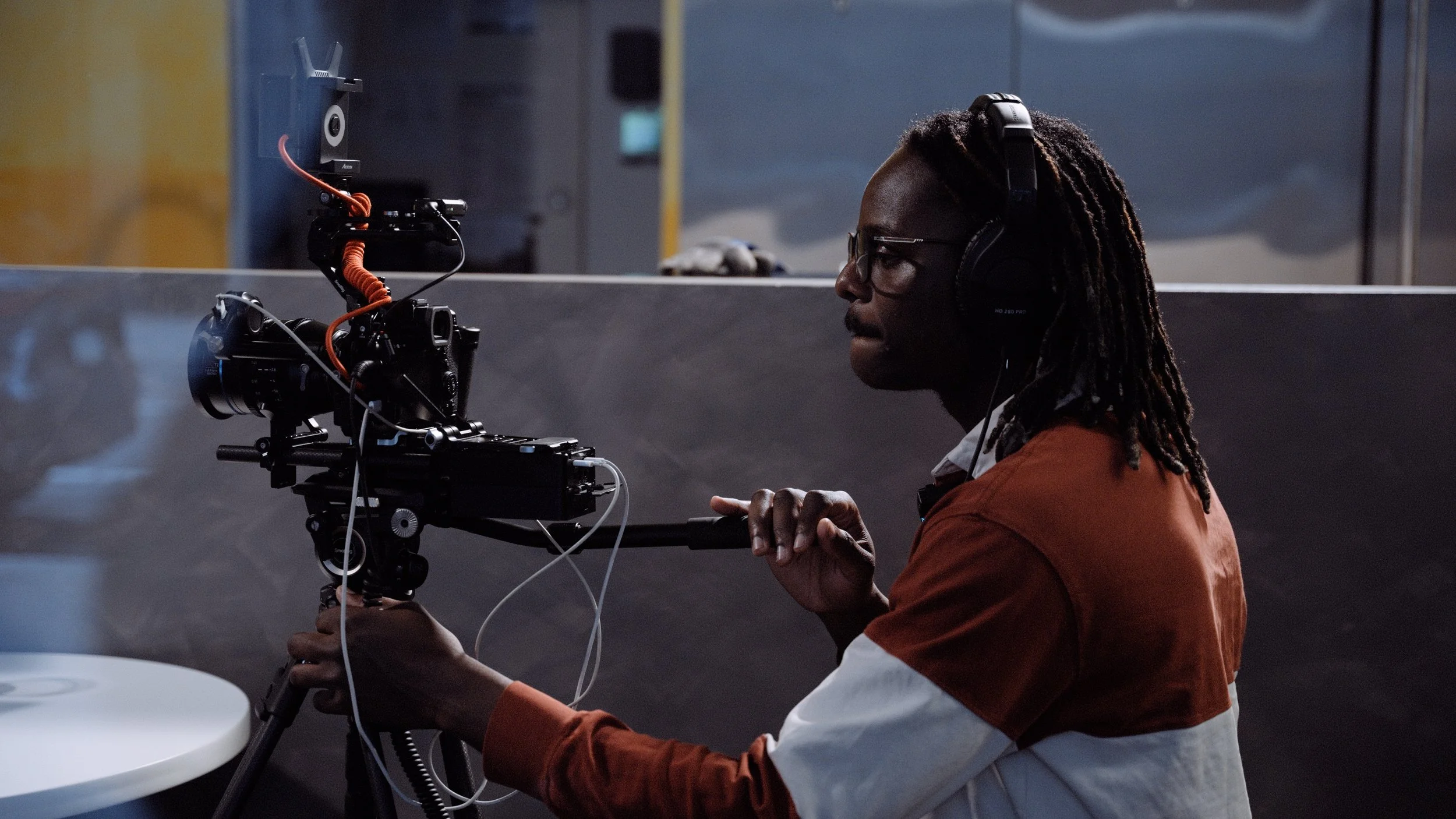
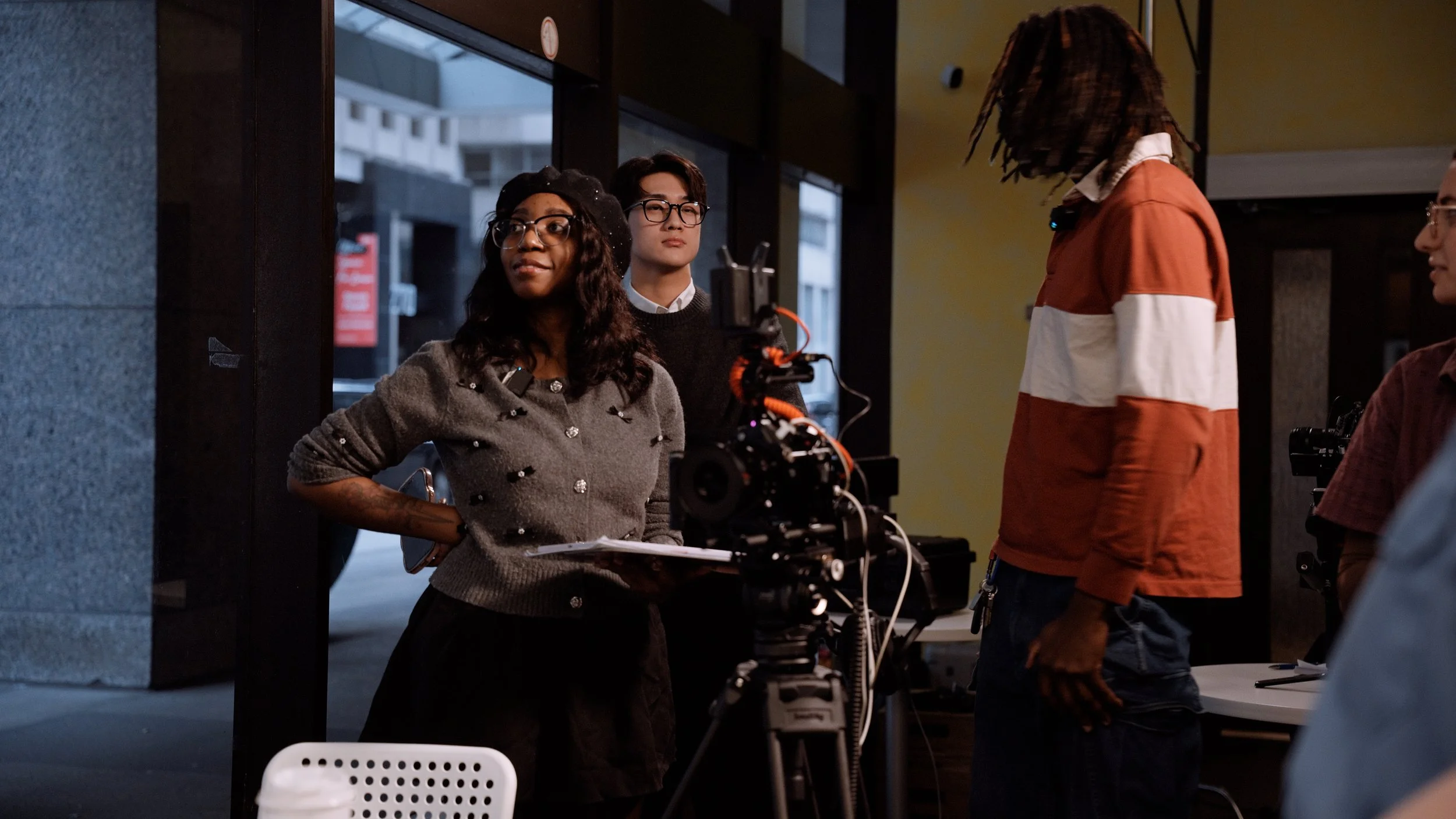
Our final stop was a café, where registered filmmaker Ruth Kabengele (Writer, Director and Producer) and Kenneth Joe-Ezigbo (Director of Photography and Gaffer) were in the middle of filming. The team worked through their shots with cameras and equipment set up around the space, moving from one setup to the next in a steady, focused way. They even finished earlier than planned and were getting ready to head to their next location when we left!
Every production has its own pace. Some shoots might run right up to the deadline, while others wrap earlier than expected. The important thing is finding a rhythm that works for your team, staying flexible and making the most of the time you have.
So, what's the right way to make a film?
If you came into this article looking for a formula to follow, you might be disappointed. We saw different crew sizes, different equipment, different working environments and completely different approaches to getting things done. Some filmmakers work with a team of ten or more, while others are perfectly happy creating something largely on their own. Some rely on traditional filming equipment, while others find creative ways to use whatever is available to them.
And that's the point.
There's no need to replicate another filmmaker's process or feel that you need a particular setup before you can start creating. A skateboard can become a camera dolly. A television can become a backdrop. A phone can become your camera. What matters is finding a way to bring your idea to life.
We also came away thinking about the people behind the productions. A film set is a little world of its own, and every crew develops its own way of communicating, collaborating and finding its rhythm. Sometimes it's about having clearly defined roles; other times it's about exchanging ideas freely and figuring things out together. Ultimately, it's about finding your people and getting on the same wavelength to make something you believe in.
For the Digi60 team, getting to step away from our usual roles and spend time with these filmmakers was a wonderful opportunity to experience the challenge from another perspective. We got to see the creativity, resourcefulness, experimentation and teamwork that happen long before an audience sees the finished film.
Four productions, four very different approaches, and one shared love of making films.
We can't wait to see the finished stories on screen!